Three dances
What a lion dance, a fan dance and a ribbon dance are, and where each one comes from.
What a lion dance, a fan dance and a ribbon dance are, and where each one comes from.
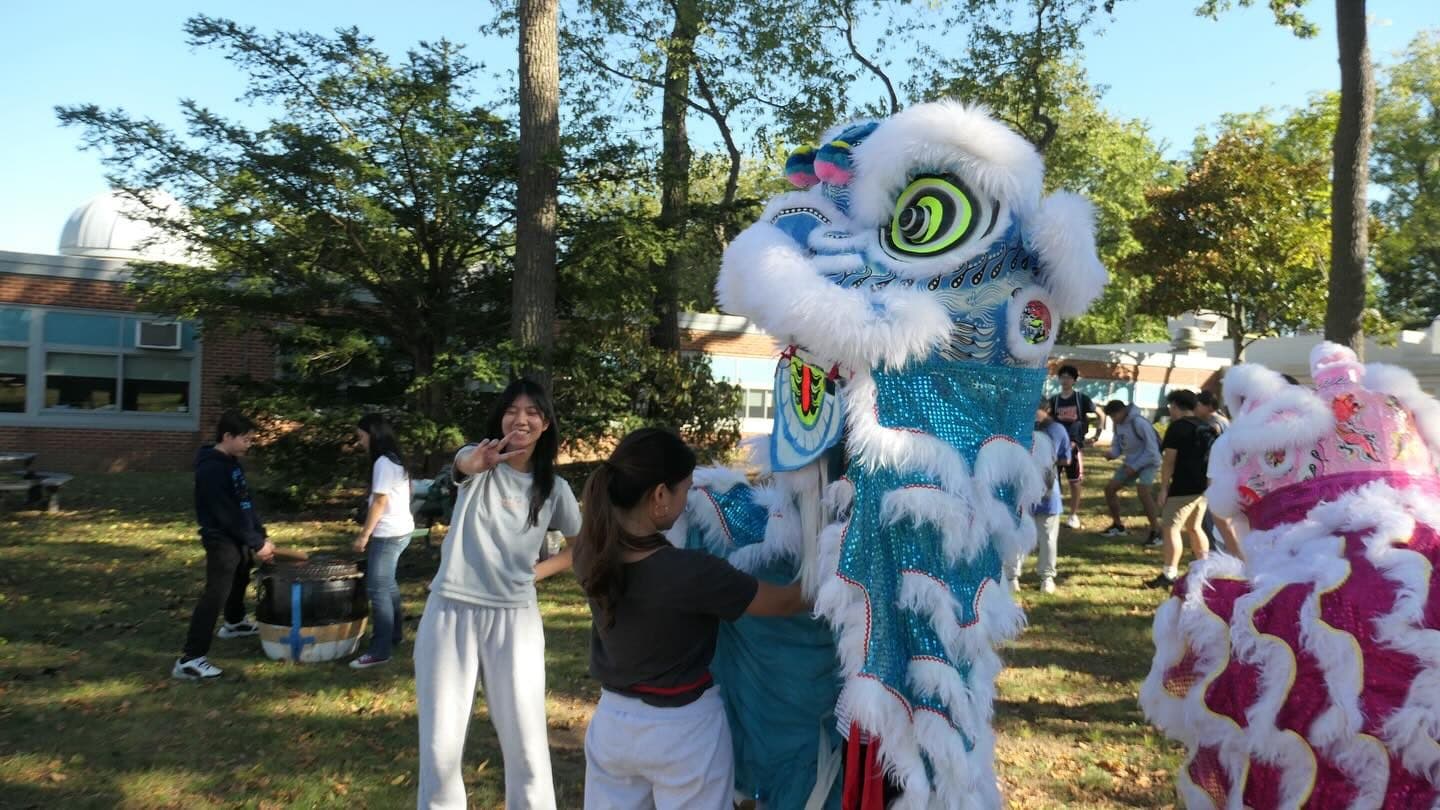
Lions are not native to China. They arrived as gifts to the court, carried along the Silk Road, and the dance that grew up around them is recorded from at least the Tang dynasty, more than a thousand years ago. The costume is worked by two dancers, one in the head and one bent double as the body and tail, and the music is a drum, a gong and cymbals, which set the pace and tell the lion when to wake, when to prowl and when to sleep.
There are two broad kinds. The northern lion is shaggy, in gold and red, and tends to be performed in pairs, with a lot of tumbling and balancing on balls and benches. The southern lion comes from Guangdong, and it is the one most often seen abroad: a single horn, a mirror on the forehead, big eyes that blink and ears that flick, and a way of moving that owes more to kung fu than to acrobatics, since the troupes have traditionally been martial-arts schools.
The set piece is cai qing, plucking the greens. A head of lettuce is hung up high with a red envelope tucked inside it, and the lion has to work out how to reach it, eat it, and scatter the leaves back over the crowd, which is the blessing. In Cantonese the word for lettuce sounds like the words for making money, which is the whole joke and the whole point.
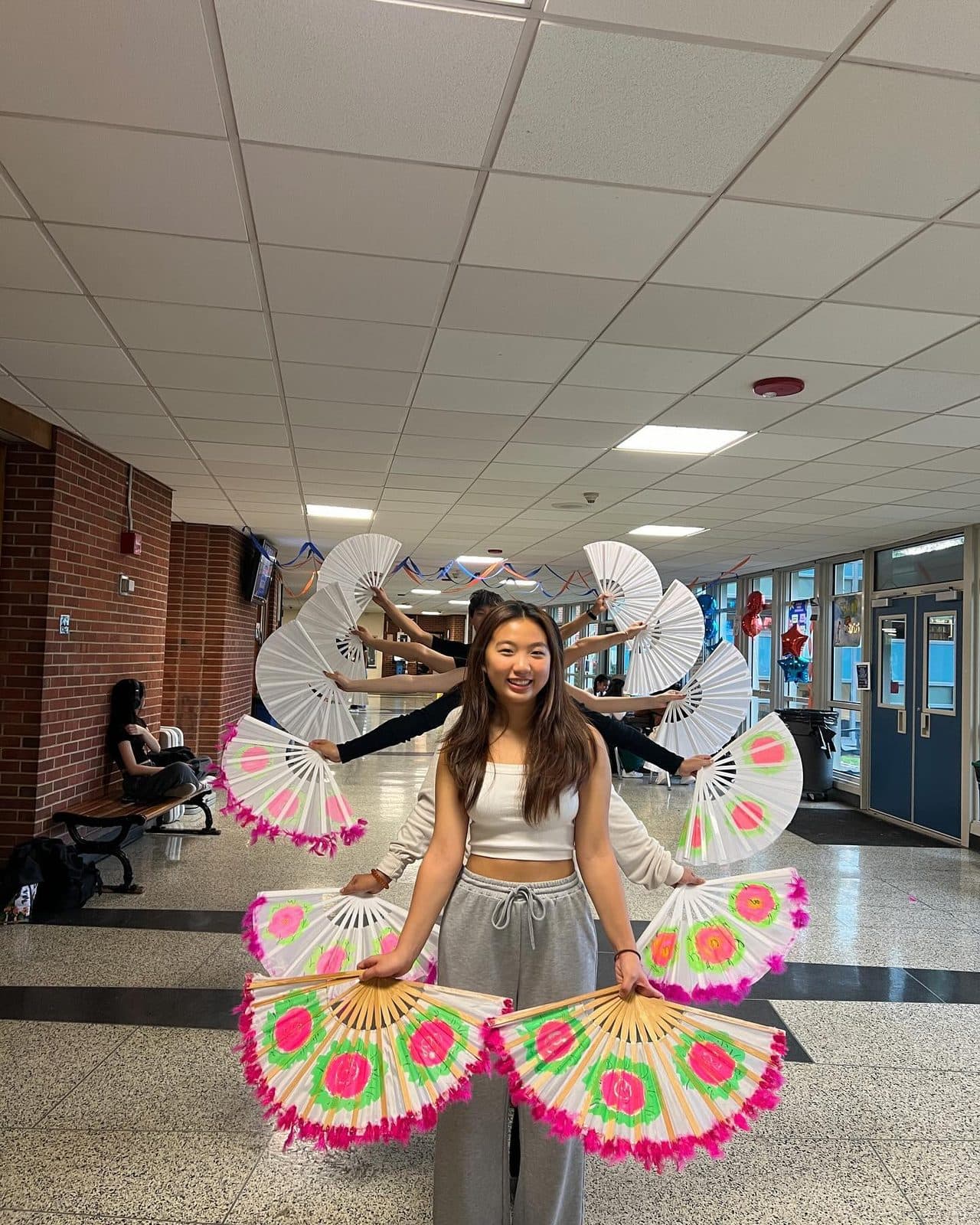
The fan dance in China is usually dated to the Han dynasty, which puts it at about two thousand years old. The fan is prop and instrument at once: a folding fan opened with a snap lands exactly on the beat, so the dance is heard as well as seen, and a fan held at arm's length carries the line of the arm a foot further than the hand can reach. Fans for dancing are bigger than fans for keeping cool, silk or paper over long ribs, so that they catch the air.
Korea has buchaechum, the fan dance most people picture when they hear the words: a group of dancers in hanbok, each holding a large fan in both hands, painted with peonies and edged with feathers, and moving together so that the fans join into one shape, a wave, a flower that opens and closes, a butterfly. It looks ancient, and it is not: it was put together in 1954 by the dancer Kim Baek-bong, from older court and shamanic movement, and it has been a fixture of Korean festivals ever since.
The move every fan dance comes back to is the snap: one flick of the wrist takes the fan from shut to fully open on a single beat, and the next flick shuts it again. A line of dancers snapping together is the sound of the dance as much as the drum is.
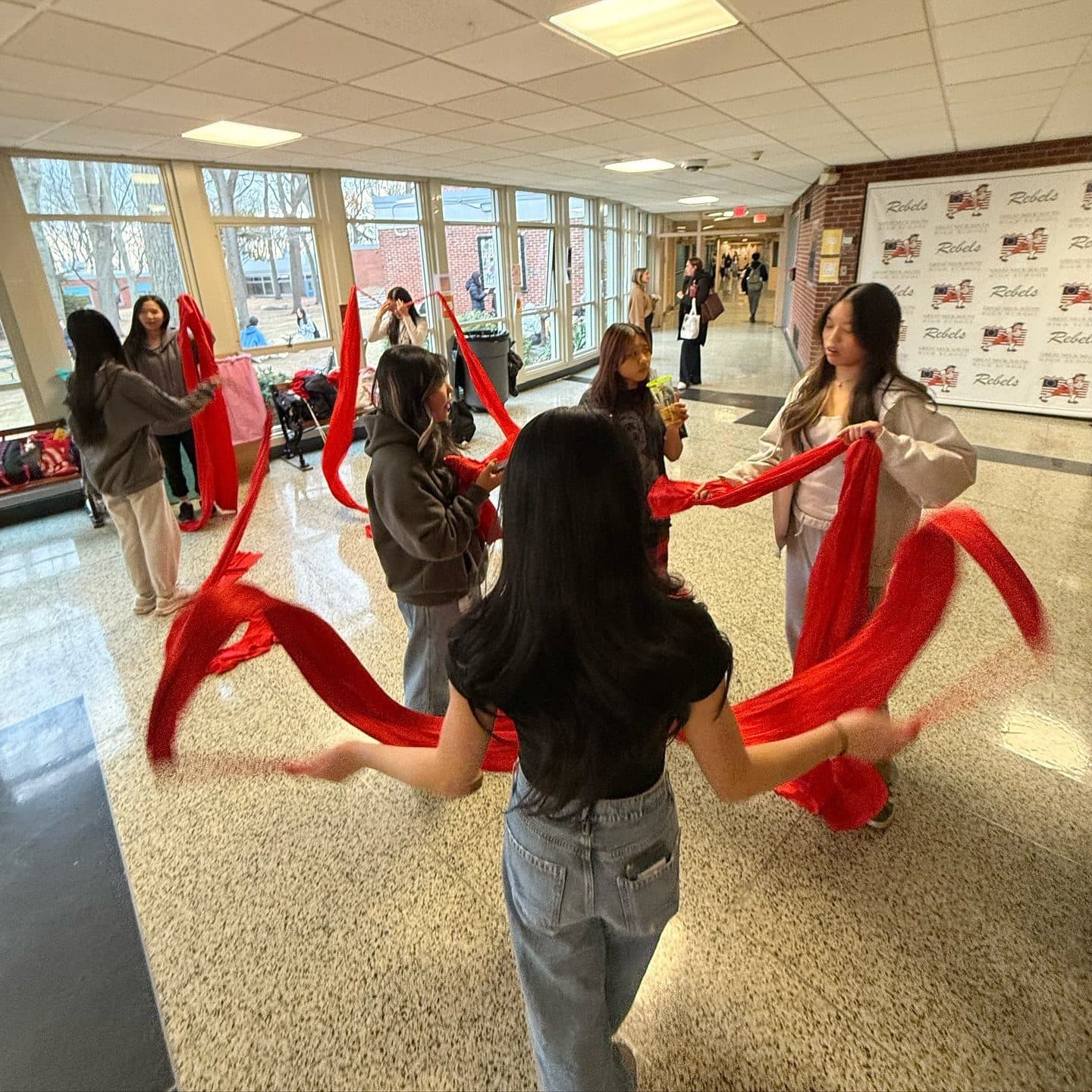
The ribbon dance is usually traced to the Han dynasty, and to dancers who performed with very long silk sleeves. At some point the sleeve became a separate strip of silk fixed to a short rod, which could be thrown further and higher than a sleeve ever could, and the ribbon dance is the result. A ribbon can be several metres long, and the longer it is, the harder it is to keep off the floor.
That is the whole craft: keeping the silk in the air. A ribbon that stops moving falls, so the dancer draws one figure straight into the next without a pause, circles, spirals, figures of eight, a wave that runs the full length of the silk, and the body turns underneath to keep up. Danced in a group, the ribbons are timed to pass over and under one another without tangling, which is a good deal harder than it looks.
Red is the usual colour, because red is the colour of luck and of celebration, and because a red line shows against anything.