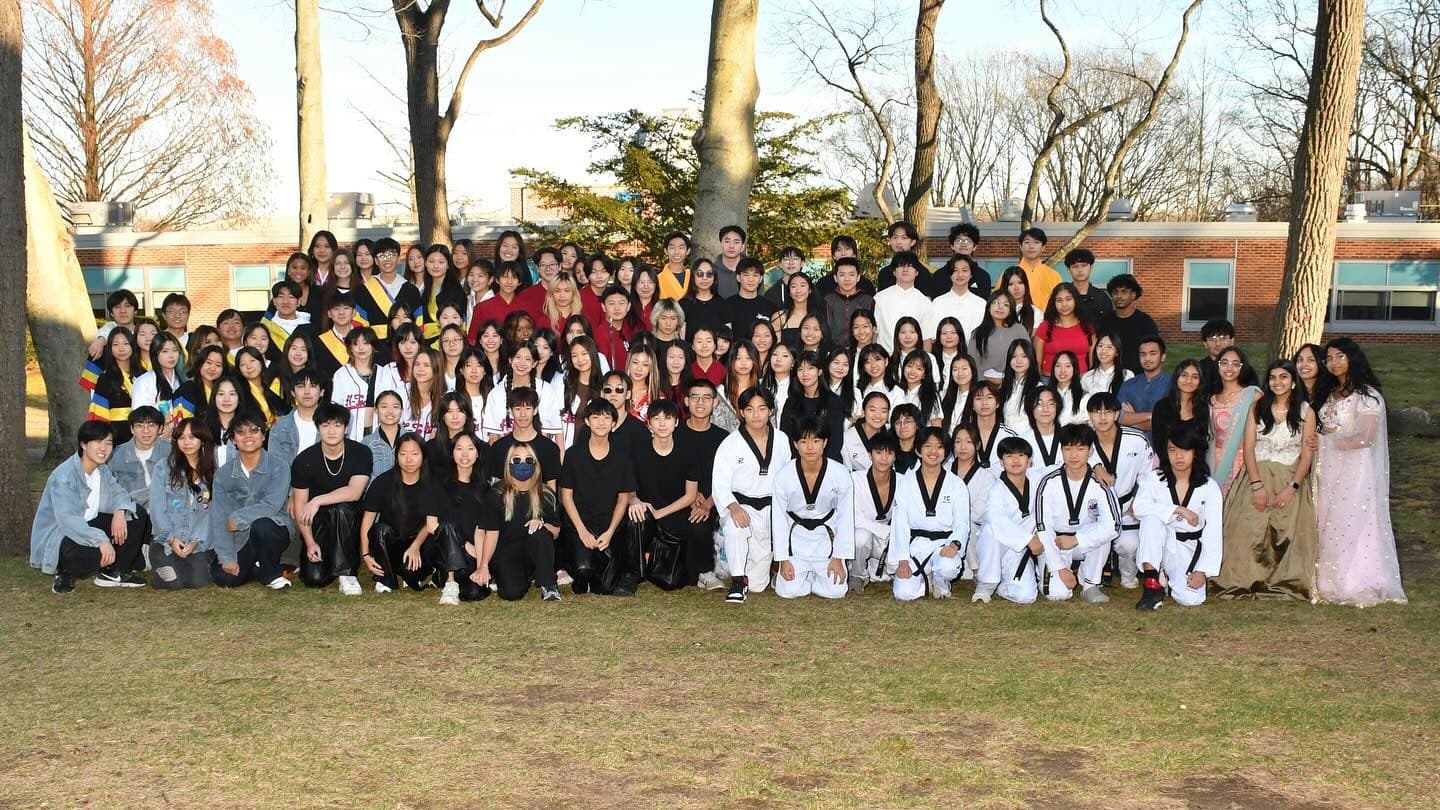
Lion dance, fan dance and ribbon dance. Every photograph on this site is the club's own, from something the club was doing.
Lion dance
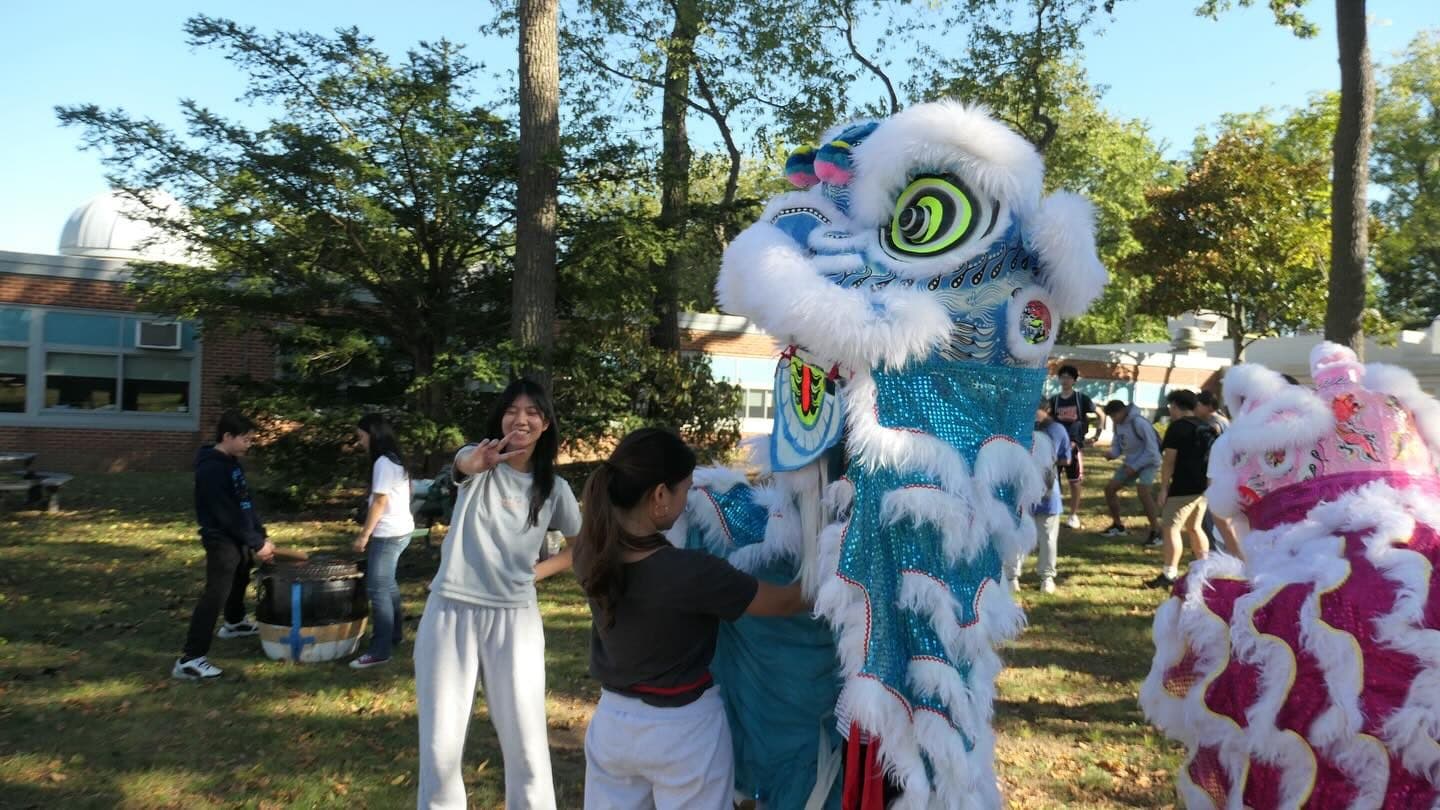
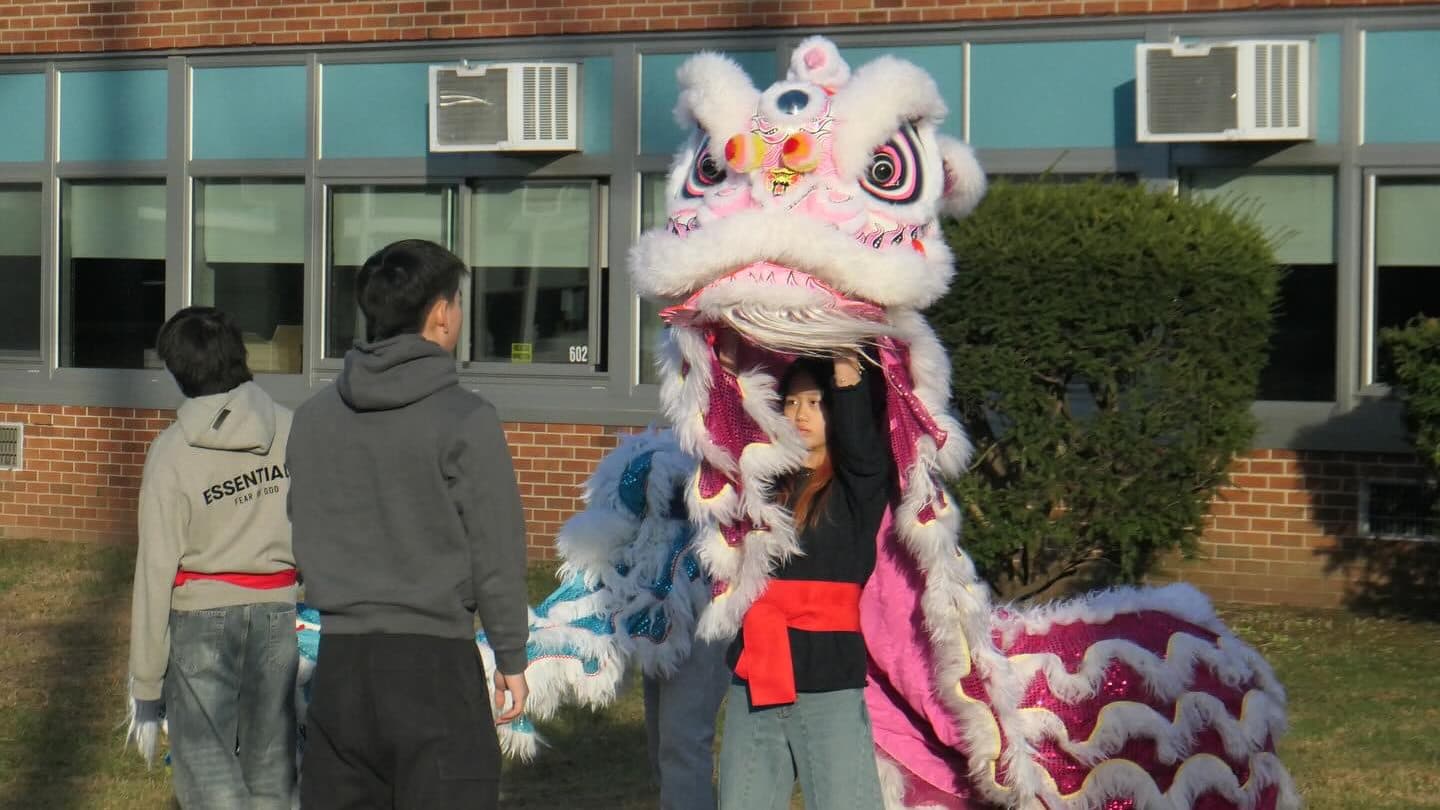
Lion dance is done at Lunar New Year, and at openings, weddings and anything else that could use some luck: the lion is there to bring it, and to frighten off whatever bad luck was hanging about. Two dancers share one costume, one working the head and one the tail, and they move to a drum, a gong and a pair of cymbals. The lion most often seen outside China is the southern lion, with a single horn, big blinking eyes and a small mirror on its forehead.
Fan dance
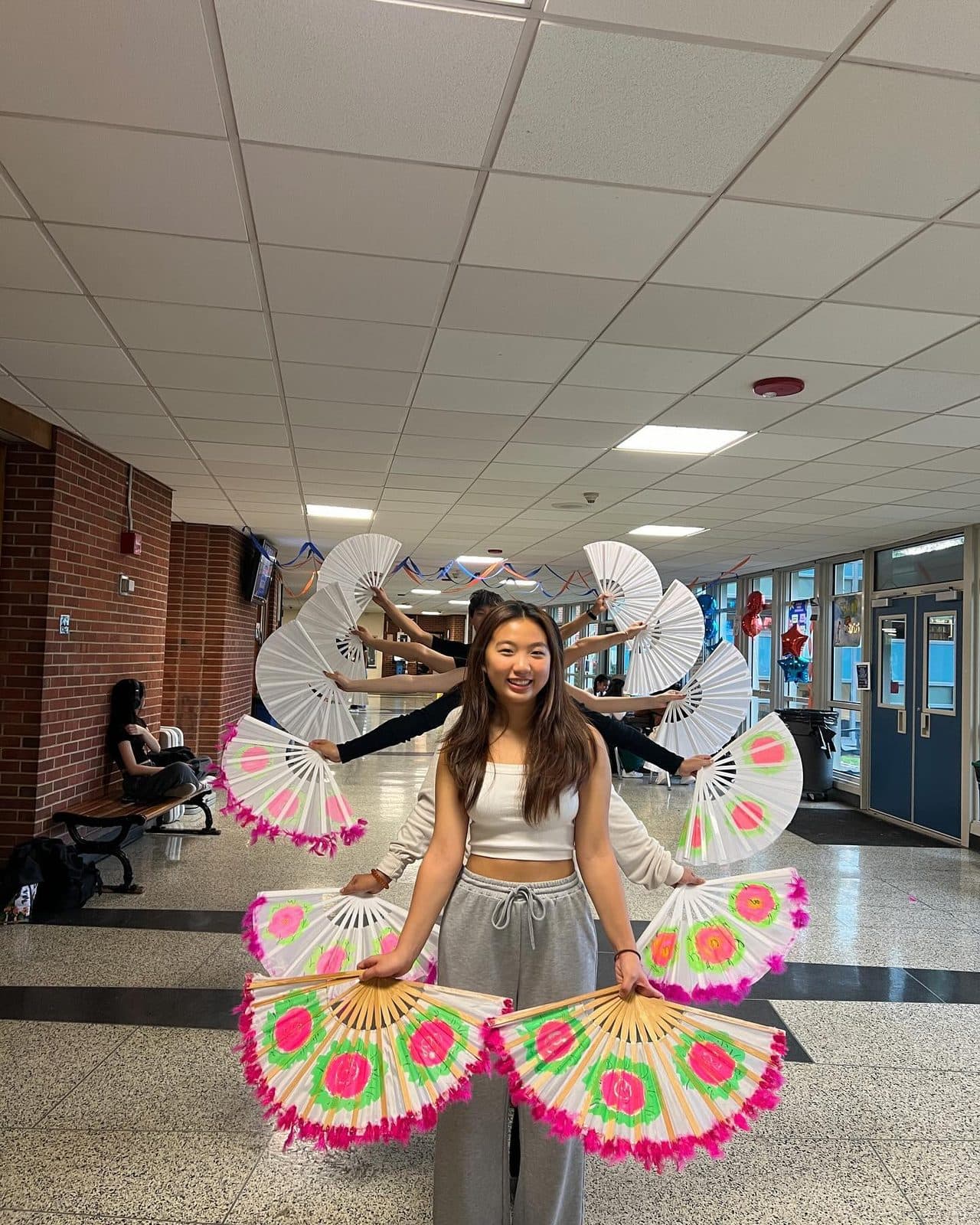
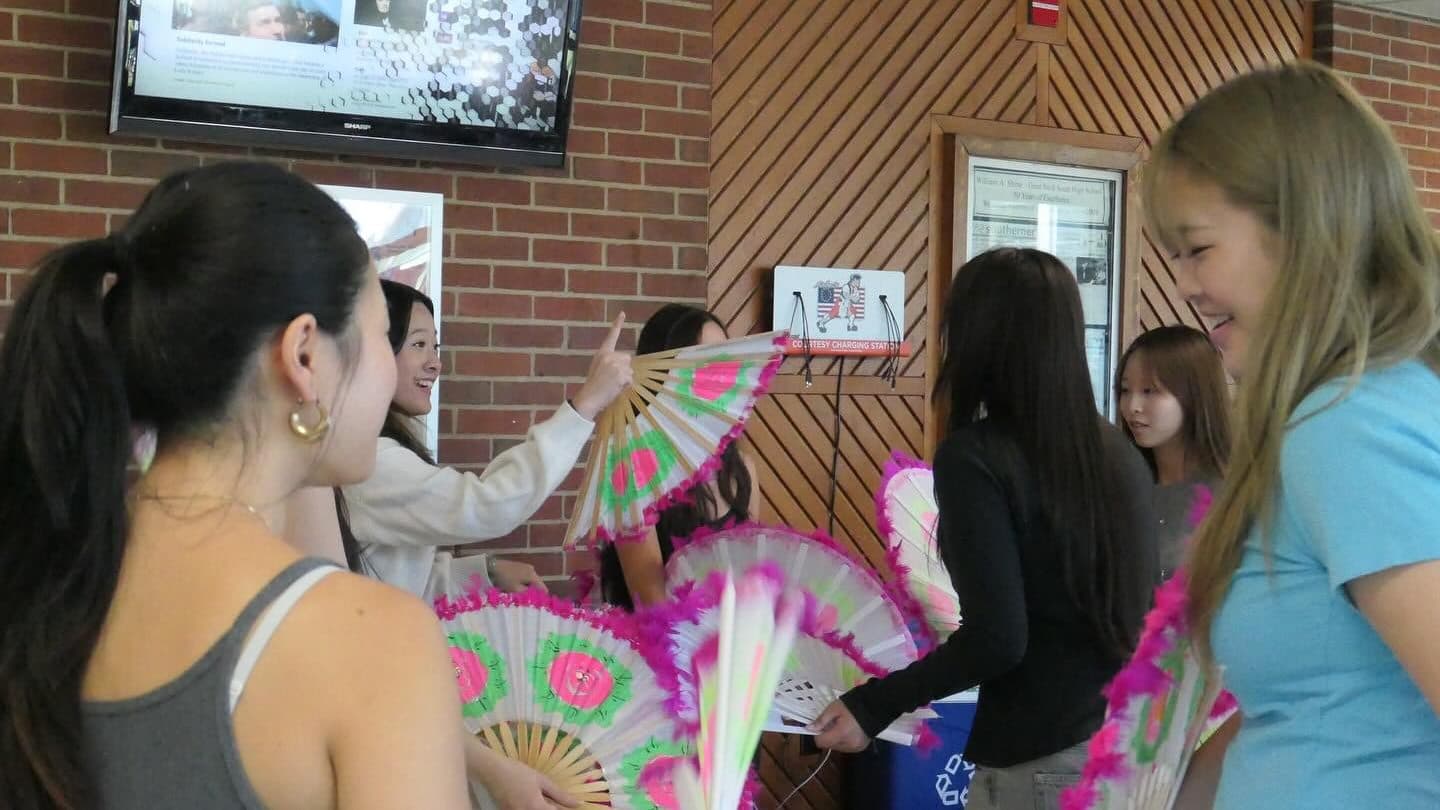
Fan dances are found right across East Asia. The Chinese fan dance is usually dated to the Han dynasty, about two thousand years ago; in it a folding fan is opened with a snap on the beat, so it is heard as well as seen. The Korean fan dance, buchaechum, is danced in a group, each dancer with a large peony-painted fan in either hand, and the fans are moved together so that they join into one shape: a wave, a flower opening, a butterfly.
Ribbon dance
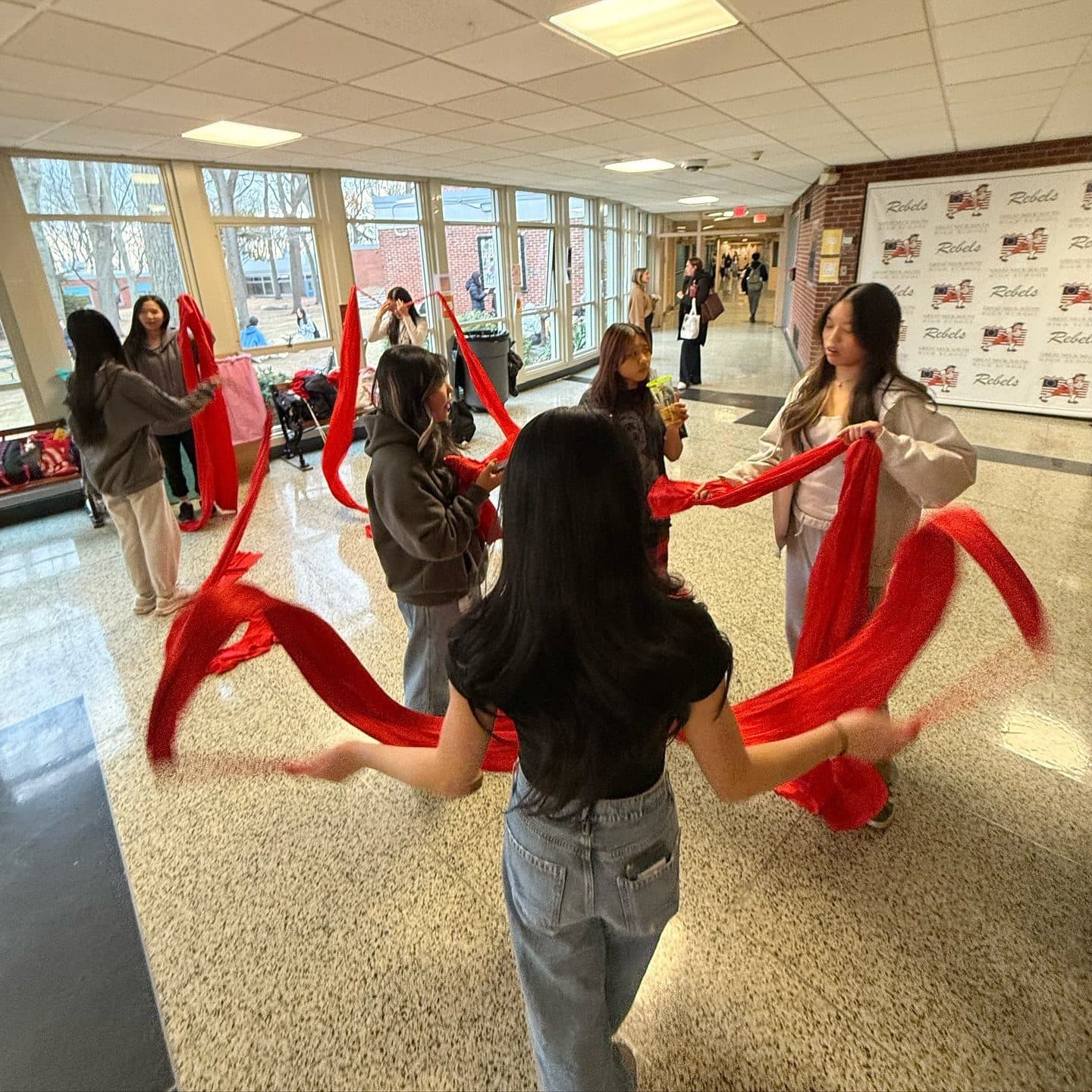
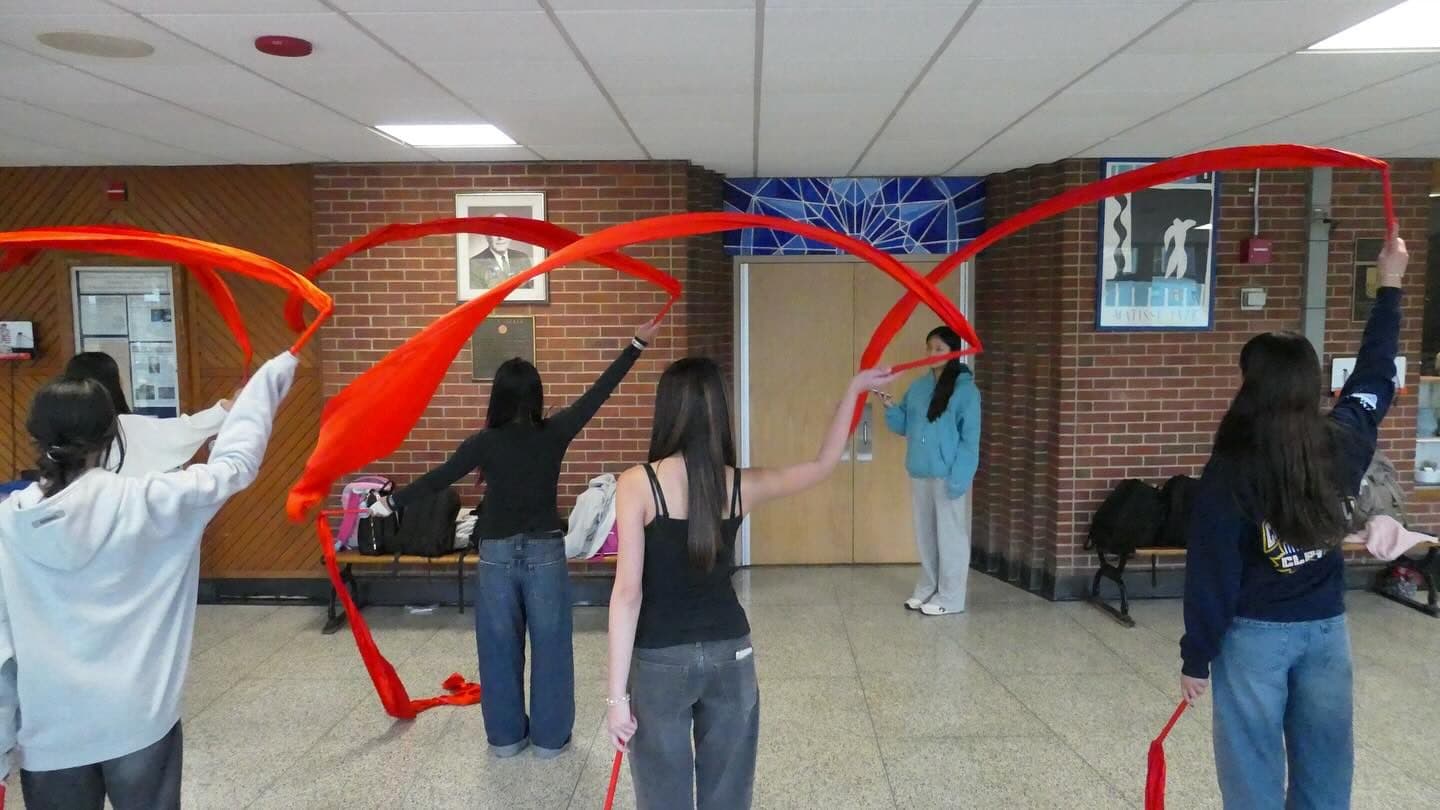
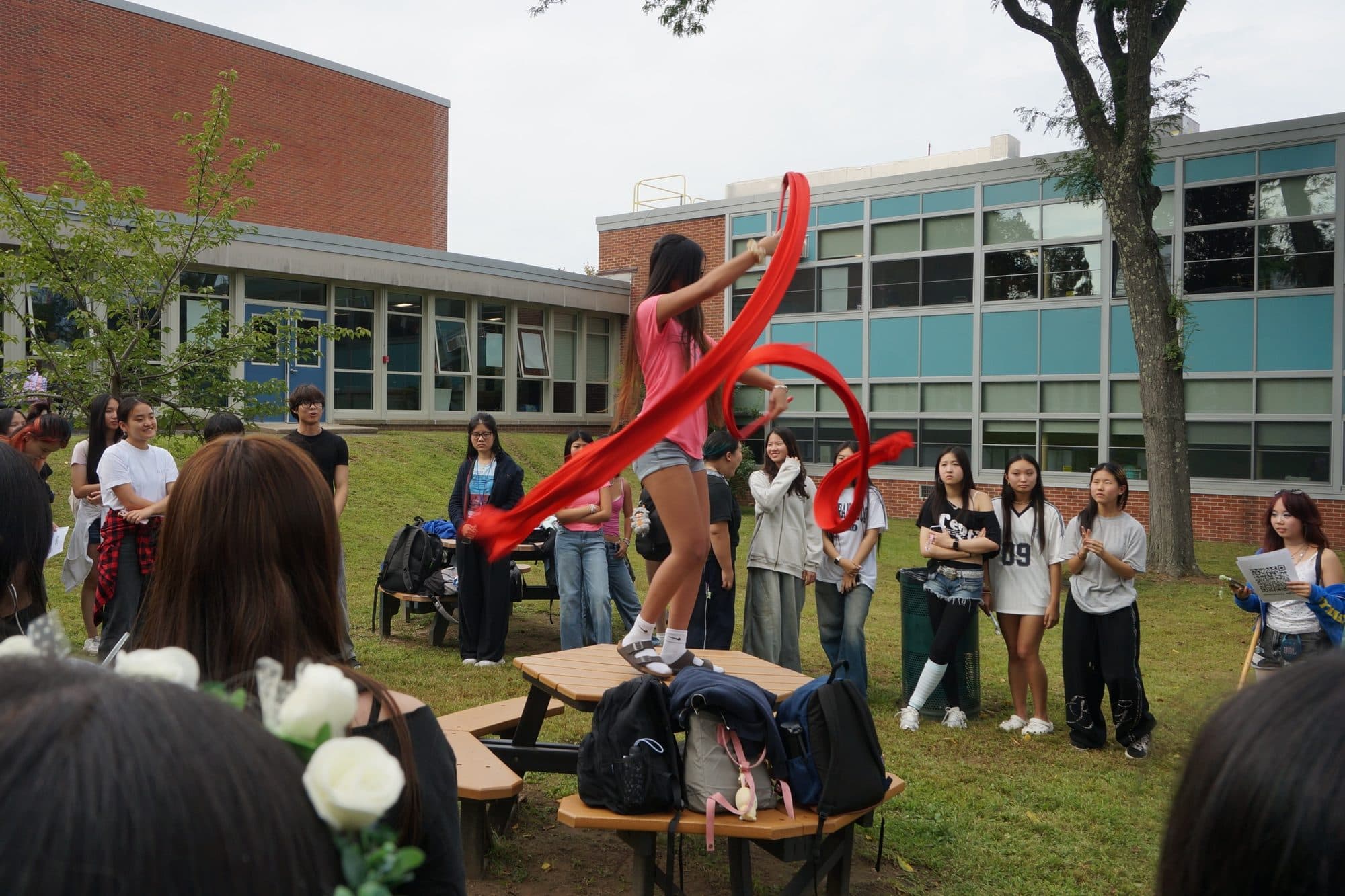
The ribbon dance is usually traced to the Han dynasty as well. Each ribbon is a long strip of silk on a short rod, and the whole craft is keeping it in the air: a ribbon that stops moving falls, so one figure is drawn straight into the next without a pause, circles into spirals into figures of eight. Red is the usual colour, because red is the colour of luck and of celebration.